
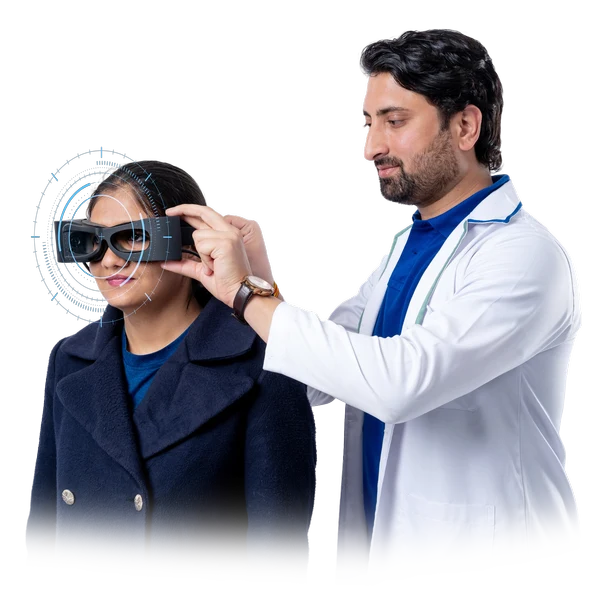






NeuroEquilibrium vHIT offers a fast, accurate, and reliable method for assessing the high-frequency VOR, enabling effective diagnosis and treatment planning for vestibular disorders.
The vHIT (video Head Impulse Test) is used to assess how well the inner ear balance canals work during quick head movements. It measures the vestibulo-ocular reflex, which stabilizes vision when the head moves. By tracking eye movements with high-speed cameras, clinics like Neuroequillibrium use vHIT to detect subtle vestibular deficits that may not appear on routine balance tests.
VNG evaluates the vestibular system using slower head movements, visual tracking, and positional tests, while vHIT focuses on rapid, natural head impulses. vHIT assesses high-frequency vestibular function, whereas VNG mainly tests low-frequency responses. Many specialists, including teams at Neuroequillibrium, use both tests together to gain a more complete picture of balance system performance.
A vHIT test is quick and usually takes about 10 to 15 minutes. The test involves wearing lightweight goggles while the examiner gently but rapidly moves the head in different directions. It is non-invasive and generally well tolerated, with minimal discomfort. Because of its short duration, it is often included in comprehensive vestibular evaluations.
A positive head impulse test indicates reduced function of the vestibular system on one side. It means the eyes cannot stay focused on a target during rapid head movement and need a corrective movement to refocus. This finding commonly suggests peripheral vestibular disorders, such as vestibular neuritis or unilateral vestibular hypofunction.
A normal vHIT value typically shows a vestibulo-ocular reflex gain close to 1.0, meaning eye movement closely matches head movement. Values generally above 0.8 are considered normal, depending on the canal tested. Normal results indicate that the inner ear balance organs are effectively stabilizing vision during rapid head movements.



