
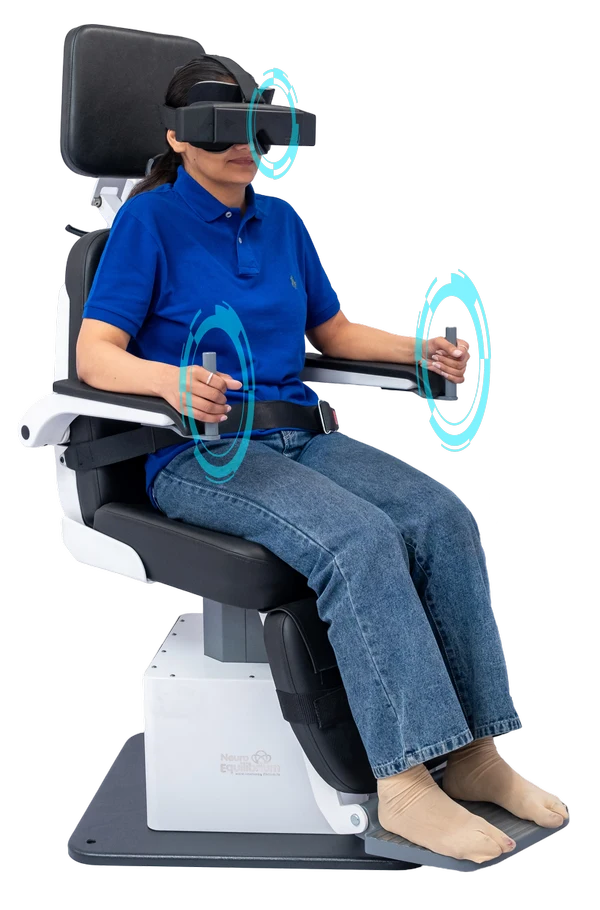






NeuroEquilibrium Rotary Chair offers an advanced, safe, and reliable method for evaluating vestibular function, ensuring precise diagnosis and effective treatment planning.
A rotary chair test typically takes about 30 to 45 minutes to complete. This includes preparation time, the actual testing, and short breaks if needed. During the test, the patient sits securely in a motorized chair while eye movements are recorded. The procedure is controlled, non-invasive, and designed to accurately assess balance function without prolonged discomfort.
The main difference between a rotary chair test and VNG is how they stimulate and assess the vestibular system. VNG evaluates balance using head movements, visual tracking, and ear stimulation, while the rotary chair uses precise rotational movements. Rotary chair testing is especially useful for detecting bilateral or subtle vestibular deficits that may not appear clearly on VNG alone.
The rotary chair test is not primarily used to diagnose BPPV. BPPV is usually identified through positional tests like the Dix–Hallpike maneuver. However, rotary chair testing can help evaluate overall vestibular function if symptoms persist or if the diagnosis is unclear. At advanced centers like Neuroequillibrium, it may be used alongside other tests for a comprehensive assessment.
Vestibular testing provides detailed information about how well the inner ear and brain work together to maintain balance and stable vision. It helps determine whether dizziness or imbalance is caused by one ear, both ears, or central pathways. The results guide accurate diagnosis and treatment planning, which is why comprehensive testing is offered at specialized clinics such as Neuroequillibrium.
General signs of poor vestibular function include frequent dizziness, unsteadiness while walking, blurred vision during head movement, and difficulty maintaining balance. Some people may feel disoriented in busy environments or experience frequent falls. These symptoms can interfere with daily activities and often indicate that the balance system is not processing movement information correctly.



